Del MVP al dominio del mercado
Domina las decisiones técnicas y estratégicas de arquitectura que separan a los SaaS que escalan de los que colapsan bajo su propio peso
Alrededor del 70 % de las empresas SaaS que logran el ajuste producto-mercado tropiezan al escalar su arquitectura técnica. El problema casi nunca es la falta de demanda, sino unas bases construidas para validar un producto, no para hacerlo crecer.
La falsa disyuntiva entre "moverse rápido" y "construir bien" se desmorona cuando se analiza con calma. La verdadera pregunta es: ¿cómo hacer evolucionar tu arquitectura de forma deliberada, sin frenar a tu equipo ni apostarlo todo a una reescritura riesgosa?
Evolución de la arquitectura
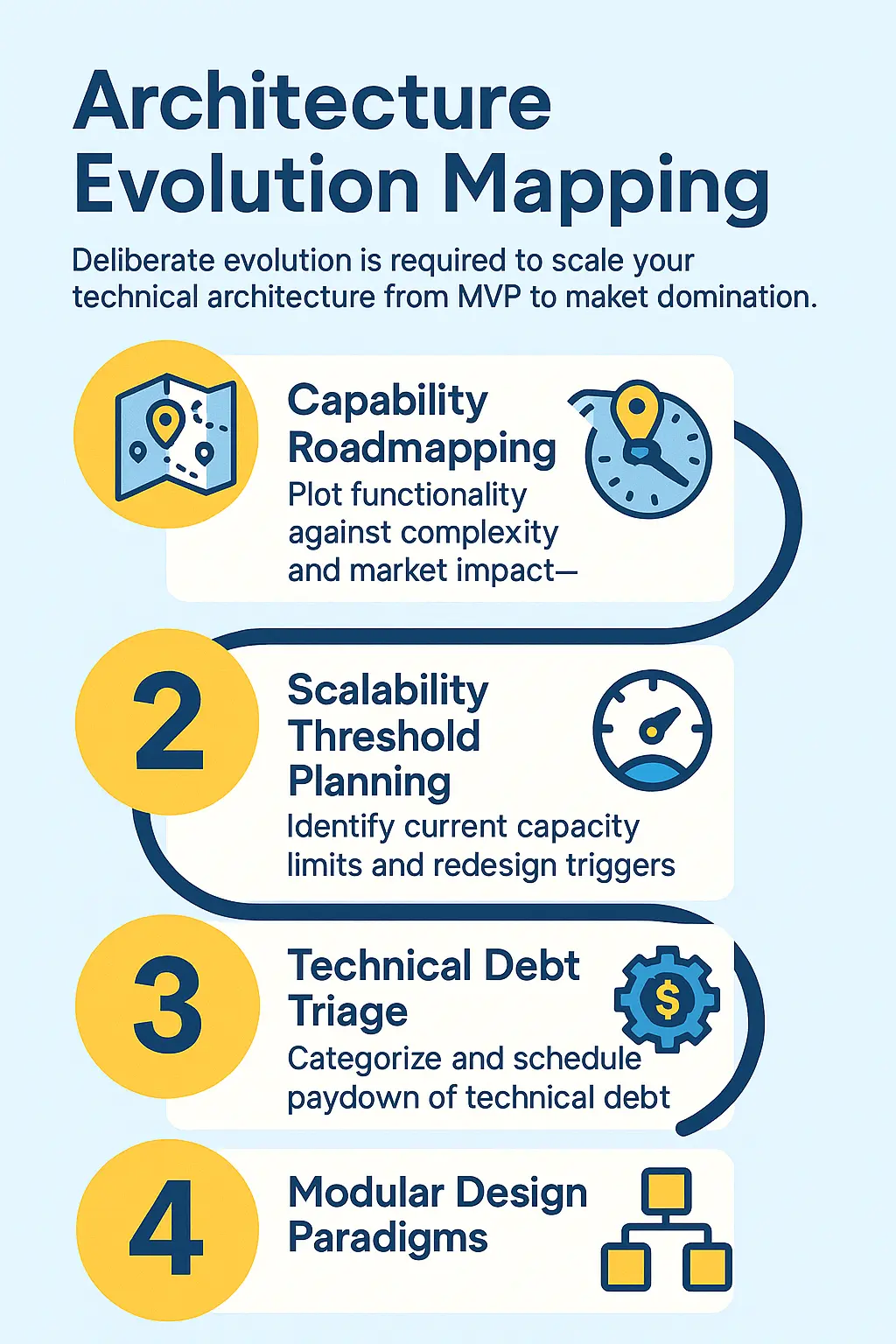
Escalar no significa agregar funcionalidades sobre una base estática. Significa hacer evolucionar la arquitectura a medida que crece el producto, adelantándose a los problemas en lugar de reaccionar ante ellos.
Cómo abordarlo:
- Roadmap de capacidades: mapea la funcionalidad crítica según su complejidad técnica y su impacto en el negocio. Eso te indica dónde invertir el esfuerzo de arquitectura, en lugar de decidirlo según quién pidió más fuerte.
- Planificación de umbrales de escalabilidad: identifica los puntos de quiebre de tu arquitectura actual antes de llegar a ellos. Documenta los límites de capacidad de cada componente y define disparadores, basados en métricas de crecimiento, para saber cuándo empezar a rediseñar.
- Triaje de la deuda técnica: separa la deuda "estratégica" (concesiones deliberadas que aceleraron la salida al mercado) de la deuda "accidental" (implementaciones deficientes por falta de conocimiento). Define calendarios explícitos para saldar cada una.
Arquitectura modular
Tarde o temprano, escalar exige dividir los sistemas monolíticos en componentes que puedan cambiar de forma independiente sin tumbar todo lo demás.
Estrategia de aislamiento de componentes:
- Límites guiados por el dominio: segmenta tu arquitectura según los dominios del negocio, no según la función técnica. Así los equipos pueden innovar en su área sin desestabilizar partes no relacionadas.
- Contratos de estabilidad de interfaces: define políticas explícitas de versionado y deprecación para tus APIs internas y externas. Esto preserva la compatibilidad y permite que la implementación evolucione por debajo.
- Migración a servicios sin estado: traslada gradualmente los componentes con estado a servicios sin estado que escalen horizontalmente. Empieza por las funciones de alto volumen y baja complejidad.
Planificar para escalar
Diseñar para escalar significa encontrar los cuellos de botella de rendimiento antes de que se conviertan en incidentes que vean los clientes.
Cómo abordarlo:
- Modelado de patrones de carga: analiza los patrones de uso actuales y construye modelos de carga sintética que simulen 10, 100 y 1000 veces el tráfico. Ponlos a prueba contra tu arquitectura para encontrar los puntos de quiebre antes de que aparezcan en producción.
- Mapa de límites de rendimiento: documenta los límites de rendimiento de cada componente bajo distintas cargas. Así obtienes un mapa de estrés que muestra qué componentes necesitarán rediseño a medida que creces.
- Elasticidad de recursos: implementa autoescalado que responda a la demanda sin intervención manual, para que los picos de crecimiento no exijan respuestas de emergencia.
Estrategia de integraciones
A medida que tu producto crece, qué tan bien se integra con otras herramientas se convierte en un factor diferenciador frente a la competencia.
Qué significa en la práctica:
- Desarrollo API-first: diseña la API antes que la implementación. Cada funcionalidad debería ser accesible de forma programática desde el primer día.
- Capa de extensibilidad: crea puntos de extensión dedicados que expongan las capacidades centrales y, a la vez, aíslen el código de terceros de los sistemas críticos.
- Marco de integración para socios: construye marcos técnicos para tus socios que equilibren las restricciones de seguridad con la velocidad de desarrollo.
El roadmap de arquitectura de 90 días
Un marco estructurado para la evolución de la arquitectura en la etapa de crecimiento:
Mes 1: evaluación de la arquitectura
- Semanas 1-2: documenta la arquitectura actual e identifica las limitaciones para escalar
- Semana 3: crea modelos de carga y un marco de pruebas de rendimiento
- Semana 4: prioriza las mejoras de arquitectura según su impacto en el negocio
- Semanas 5-6: diseña una arquitectura modular con límites de dominio claros
- Semanas 7-8: crea una estrategia de migración con la menor disrupción posible
- Semanas 9-10: implementa las mejoras de arquitectura de mayor prioridad
- Semanas 11-12: establece monitoreo y métricas de la salud de la arquitectura
Por qué importa
Una evolución de arquitectura bien ejecutada produce resultados de negocio concretos:
- Velocidad sostenida: el ritmo de desarrollo se mantiene aunque crezcan el código y el equipo
- Confiabilidad: sistemas que se degradan de forma controlada en lugar de fallar de golpe
- Economía de escala: infraestructura cuyo costo no crece de forma lineal con la cantidad de clientes
- Flexibilidad: bases capaces de sostener direcciones de producto que todavía no has anticipado
Próximos pasos
Algunos principios para tener en cuenta:
- Arquitectura centrada en el negocio: alinea las decisiones técnicas con los resultados del negocio, no con la elegancia por sí misma
- Evolución antes que revolución: las mejoras incrementales le ganan a las reescrituras de alto riesgo
- Pensar en componentes: diseña los sistemas como servicios con bajo acoplamiento
- Observabilidad desde el primer día: incorpora la instrumentación desde el inicio, no como un agregado posterior